Climate change: vital signs
Global temperature rise

The planet's average surface temperature has risen about 2.0 degrees
Fahrenheit (1.1 degrees Celsius) since the late 19th century, a change
driven largely by increased carbon dioxide and other human-made
emissions into the atmosphere.
Warming oceans

The oceans have absorbed much of this increased heat, with the top 700
meters (about 2,300 feet) of ocean showing warming of 0.302 degrees
Fahrenheit since 1969.
Shrinking ice sheets
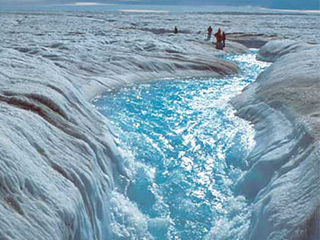
The Greenland and Antarctic ice sheets have decreased in mass. Data from
NASA's Gravity Recovery and Climate Experiment show Greenland lost 150
to 250 cubic kilometers (36 to 60 cubic miles) of ice per year between
2002 and 2006, while Antarctica lost about 152 cubic kilometers (36
cubic miles) of ice between 2002 and 2005.
Glacial retreat
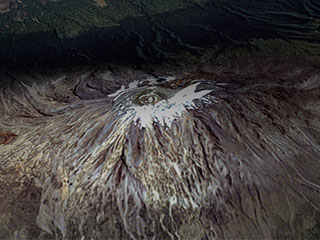
Glaciers are retreating almost everywhere around the world — including in the Alps, Himalayas, Andes, Rockies, Alaska and Africa.
Decreased snow cover
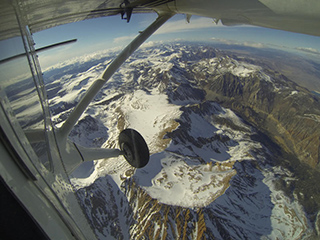
Satellite observations reveal that the amount of spring snow cover in
the Northern Hemisphere has decreased over the past five decades and
that the snow is melting earlier.
Sea level rise

Global sea level rose about 8 inches in the last century. The rate in
the last two decades, however, is nearly double that of the last
century.
Declining Arctic sea ice
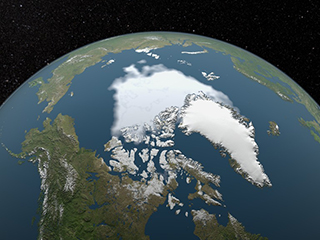
Both the extent and thickness of Arctic sea ice has declined rapidly over the last several decades.
Extreme events

The number of record high temperature events in the United States has
been increasing, while the number of record low temperature events has
been decreasing, since 1950. The U.S. has also witnessed increasing
numbers of intense rainfall events.
Ocean acidification

Since the beginning of the Industrial Revolution, the acidity of surface ocean waters has increased by about 30 percent. This increase is the result of humans emitting more carbon dioxide into
the atmosphere and hence more being absorbed into the oceans. The amount
of carbon dioxide absorbed by the upper layer of the oceans is
increasing by about 2 billion tons per year.

No comments:
Post a Comment