Friday, December 1, 2017

Misconceptions About Climate Change


     One of the most common misconceptions about climate change is that people state it does not exist. There’s been enough evidence provided by the NASA, among these we find:

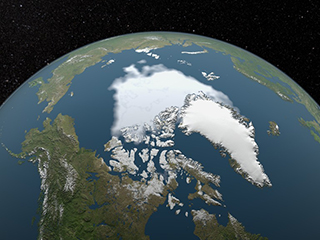
  •        The Melting of Ice Sheets:  The Greenland and Antarctic have decreased in mass. Data from NASA Gravity Recovery and Climate Recovery, show Greenland lost about 150 to 250 cubic kilometers of ice per year between 2002 and 2006.
  •         Sea Level Rises: this is a direct consequence of the melting of ice sheets. Global sea level rose about eight inches in the last century. The rate in the last two decades however, is nearly the double of that. Sea levels rise cause inundation of coastal habitats for humans as well as for plants and animals. Erosion of the earth, and more catastrophes that can devastate low-luring areas. 
  •  Glacial Retreat: here in the picture is an example for severe glacial retreat. The picture shows New Zealand Fox Glacier from 2005 to 2010, observe how the ice has literally melted, and imagine how it must be looking now.


How Google X is creating ways to combat Climate Change

Google X, or simply "X" is a moonshot branch that was created by Google in order to find creative solutions to fix many of the problems going on in today's society. Google X has created multiple projects ever since it was founded in 2010. From Google Glass, to delivering Internet to developing countries using weather balloons. Perhaps one of the most interesting projects under the X labs has been one known as project Foghorn. The premise of Project Foghorn consisted in taking Carbon Dioxide(CO2) emmissions that are left in the ocean and converting it into fuel. Carbon Dioxide in the oceans can play a big role in the foundation of hurricanes. By following with this, They would have helped reduce CO2 emmissions and would have created an alternative form of fuel, one that's much nicer to the planet than fossil fuels.
The Diagram above Illustrates how the process would have worked.

The main issue with Project Foghorn laid around cost. Scientists working on the project realized that the process of desalating the Carbon Dioxide into water would cost far too much. In addition, there aren't many desalation plants in the world right now, so the fuel made for be so significantly small that it would not be worth all the money being poured on the project. However, although the project was put on hold, The team at Google X remains optimistic in finding further ways to help our planet become greener and safer for all of us.

Thursday, November 30, 2017

Climate change: vital signs

Global temperature rise

 The planet's average surface temperature has risen about 2.0 degrees Fahrenheit (1.1 degrees Celsius) since the late 19th century

  The planet's average surface temperature has risen about 2.0 degrees Fahrenheit (1.1 degrees Celsius) since the late 19th century, a change driven largely by increased carbon dioxide and other human-made emissions into the atmosphere. 


Warming oceans


The oceans have absorbed much of this increased heat, with the top 700 meters (about 2,300 feet) of ocean showing warming of 0.302 degrees Fahrenheit since 1969 

The oceans have absorbed much of this increased heat, with the top 700 meters (about 2,300 feet) of ocean showing warming of 0.302 degrees Fahrenheit since 1969.


Shrinking ice sheets

The Greenland and Antarctic ice sheets have decreased in mass 

The Greenland and Antarctic ice sheets have decreased in mass. Data from NASA's Gravity Recovery and Climate Experiment show Greenland lost 150 to 250 cubic kilometers (36 to 60 cubic miles) of ice per year between 2002 and 2006, while Antarctica lost about 152 cubic kilometers (36 cubic miles) of ice between 2002 and 2005.


Glacial retreat

Glaciers are retreating almost everywhere around the world — including in the Alps, Himalayas, Andes, Rockies, Alaska and Africa. 

Glaciers are retreating almost everywhere around the world — including in the Alps, Himalayas, Andes, Rockies, Alaska and Africa.


Decreased snow cover

Satellite observations reveal that the amount of spring snow cover in the Northern Hemisphere has decreased over the past five decades and that the snow is melting earlier 

Satellite observations reveal that the amount of spring snow cover in the Northern Hemisphere has decreased over the past five decades and that the snow is melting earlier.


Sea level rise

Global sea level rose about 8 inches in the last century. The rate in the last two decades, however, is nearly double that of the last century 

Global sea level rose about 8 inches in the last century. The rate in the last two decades, however, is nearly double that of the last century.


Declining Arctic sea ice

 Both the extent and thickness of Arctic sea ice has declined rapidly over the last several decades 

Both the extent and thickness of Arctic sea ice has declined rapidly over the last several decades.


Extreme events

 Glaciers are retreating almost everywhere around the world — including in the Alps, Himalayas, Andes, Rockies, Alaska and Africa. 

The number of record high temperature events in the United States has been increasing, while the number of record low temperature events has been decreasing, since 1950. The U.S. has also witnessed increasing numbers of intense rainfall events.


Ocean acidification

 Since the beginning of the Industrial Revolution, the acidity of surface ocean waters has increased by about 30 percent 

Since the beginning of the Industrial Revolution, the acidity of surface ocean waters has increased by about 30 percent. This increase is the result of humans emitting more carbon dioxide into the atmosphere and hence more being absorbed into the oceans. The amount of carbon dioxide absorbed by the upper layer of the oceans is increasing by about 2 billion tons per year.

Category 6 Hurricanes?

According to CNBC, there's no chance in adding Category 6 to the Saffir-Simpson scale that essentially classifies a hurricane depending on its level of intensity and potential damage due to wind speed. Their logic is that a Category 5 is a hurricane's catastrophic peak and most buildings are already built unable to sustain Category 5 winds. I rebut that notion because despite buildings not being constructed to sustain those winds, they do. A Category 5 hurricane is considered to be any cyclone that exceeds 157 mph. Are you meaning to tell me that if we ever reached 200 mph it should still be considered a Category 5? If we had a set range for Category 5 hurricanes, in the way that we have it for Categories 1-4, we would be able to add Category 6 to the Saffir-Simpson scale. This change would ultimately be beneficial because meteorologists and hurricane specialists (such as National Oceanic and Atmospheric Administration) could bring further awareness to the public on the severity of hurricanes. By being informed through media, such as the news and weather apps, we would learn how to better prepare for disastrous hurricanes.


https://www.cnbc.com/video/2017/09/08/heres-why-theres-no-such-thing-as-a-category-6-hurricane.html
http://www.nhc.noaa.gov/
Image result for tomi lahren climate changeImage result for ann coulter climate change


This here is a small assortment of what some of the better known Republican personas have remarked against climate change. The U.S. is currently the only country that is not a part of the Paris climate agreement and that is largely due to being misinformed or simply being ignorant. I refuse to believe that anyone would be so closed minded about climate change when the whole world believes it to be a problem. I mean think about it Trump himself thinks China is to blame to make manufacturing non-competitive. Ladies and Gentlemen, there's only one truth, and that is the fact that climate change is, in fact, real and we must do something about it as soon as possible, even if we have to hear uninformed remarks or read them, whether they are written or spoken by people in power or in high standing we must endure. 

Hurricanes, Climate Change, and You.

After learning about what climate change and Hurricanes are, it is now relevant to learn how the two come together. Over the past couple of years, many news outlets and activists have pushed forward the idea of the existence of climate change. After months and years of research, there is proven fact that the Earth's climate is changing and that it is objectively getting warmer. Because of this, there are a rise in natural disasters occurring around the world with the most recent being Hurricanes affecting southeast United States and the Caribbean. So how does the earth getting warmer cause hurricanes to run rampant as cause as much damage as Maria, Irma, and Harvey have done?


Yes Really...


Well, hurricanes are formed in areas near the Atlantic Ocean or the equator, and are formed when warm air, created by the earth’s climate, mixes with the cooler air that is typically found surrounding the ocean’s surface. Water and heat evaporate from the surface of the ocean and winds begin to build up and spin. The cooler dry air sinks down in the middle in what is known as the eye of the hurricane.

So in essence, hot water is more abundant than ever because the earth is so hot that it makes the formation of Hurricanes easier, and since many hurricanes are formed near the Atlantic Ocean, you see many natural disasters occur in those areas. So when you hear that Puerto Rico was hit twice with Hurricanes, it is because of its unfortunate geographical location. Many hurricanes just happen to spawn in areas near Puerto Rico and Florida.


Monday, October 16, 2017

Sources

The source for all three of my posts is the following:
http://news.nationalgeographic.com/2017/09/hurricane-irma-harvey-season-climate-change-weather/